Does your landlord actually own your rental home? Contra Costa DA seeking victims in real estate scam
Posted: 02/27/2012 04:28:35 PM PSTUpdated: 02/27/2012 04:28:36 PM PST
Click photo to enlargeAlfonso Salazar (Contra Costa District Attorney's Office)MARTINEZ -- Investigators are looking for renters who may have fallen victim to a scam involving foreclosed and otherwise unoccupied homes rented out without the legal owners' knowledge, Contra Costa District Attorney Mark Peterson announced Monday.
The DA's office estimates that residents of more than 20 households have been paying rent to a Martinez man who illegally claimed ownership of homes in Brentwood, Antioch, Walnut Creek and Hercules and then advertised the properties as rentals on the website Craigslist.
Alfonso Salazar, a 62-year-old Martinez resident, was arraigned in Contra Costa Court on Monday afternoon on nine felony counts, including grand thefts, second-degree burglary, perjury, and filing false documents. It is unclear, at this early stage of the investigation, whether Salazar's Southern California employer, the National Alliance of Homeowners for Justice, had consent and knowledge of Salazar's criminal activities, deputy district attorney Ken McCormick said.
The National Alliance of Homeowners for Justice, which was listed as the lessor on these properties, did not return a call for comment on Monday.
"We are expecting to flush out more victims as this investigation continues," said McCormick, who charged Salazar on Friday. The renters are at risk of being evicted by the true homeowners, which in most of the cases are banks.
Salazar, a former Countrywide Mortgage employee whose real estate agent license
expired last year, identified homes that were vacant, posted a note on the front door in which he claimed ownership in the name of the National Alliance of Homeowners for Justice unless anyone objected, and changed the locks, McCormick said. One house that Salazar rented out in Walnut Creek was owned by an Alameda County resident.AdvertisementThe values of the homes ranged from $215,000 to $742,000. A court order froze a bank account containing more than $35,000, but the total amount gained from the victims is so far undetermined.
The Walnut Creek, Brentwood and Hercules police departments caught wind of what was happening late last year, at which point district attorney senior inspector Darryl Holcombe took helm of the investigation, McCormick said. Salazar's alleged crimes date back to October.
McCormick said he has prosecuted people in the past for fraudulently renting out homes through Craigslist, but he has "never had anyone so organized and sophisticated and brazen about it."
Salazar returns to court March 6 to identify his public defender and enter a plea. He is being held in West County Jail in Richmond in lieu of $180,000 bail.
The District Attorney's Office asks anyone who has been paying rent to Salazar or the National Alliance of Homeowners for Justice to contact Holcombe at 925-957-8762.
Monday, February 27, 2012
Does your landlord actually own your rental home? Contra Costa DA seeking victims in real estate scam - Walnut Creek Real Estate News


Friday, February 24, 2012
Million-dollar foreclosures rise as rich walk away - Walnut Creek Real Estate News
Million-dollar foreclosures rise as rich walk away
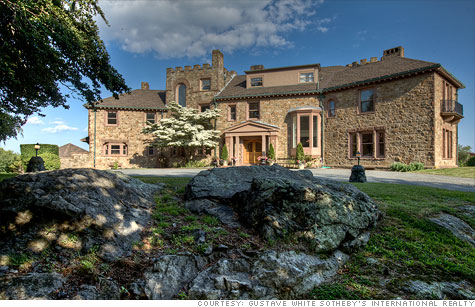
@CNNMoney February 23, 2012: 10:09 AM ETClick image to see inside 8 multi-million dollar foreclosures.
NEW YORK (CNNMoney) -- Five years after the housing bubble burst, America's wealthiest families are now losing their homes to foreclosure at a faster rate than the rest of the country -- and many of them are doing so voluntarily.
Over 36,000 homes valued at $1 million or more were foreclosed on -- or at least served with a notice of default -- in 2011, according to data compiled by RealtyTrac, which tracks foreclosures. While that's less than 2% of all foreclosures nationwide, it represents a much bigger share of foreclosure activity than in previous years.
"These properties are accounting for a bigger piece of the foreclosure pie," said Daren Blomquist, vice president of RealtyTrac.
Out of all foreclosure activity, the share of foreclosures on properties valued at $1 million or more has risen by 115% since 2007 while the share of multi-million dollar foreclosures -- or homes valued at more than $2 million -- jumped by 273%. Meanwhile, the share of foreclosures on mid-range properties valued between $500,000 and $1 million fell by 21%.
Until recently, many homeowners at the high end of the housing market were able to postpone the foreclosure process, Blomquist explained. With other assets and alternatives, "they had more financial means to hold out against default."

Friday, February 17, 2012
Reminder: 3.8% Tax Is Not a Transfer Tax on Walnut Creek Real Estate
Reminder: 3.8% Tax Is Not a Transfer Tax on Real Estate
-->Tax time is nearing and once more rumors are circulating on the Internet and by e-mail that the health care reform law enacted two years ago includes a 3.8 percent transfer tax on real estate starting in 2013. That rumor is not true; NAR has material available to you to explain how that 3.8 percent tax works. It’s a tax on a very narrow band of investment income for high-wealth households (those who earn $250,000 in a joint return or $200,000 as an individual) that could come into play on the sale of a house if the sales gain is more than $500,000 for a married couple or $250,000 for an individual.
Even in the unlikely event the sales gain is more than that amount, the tax would only apply based on other considerations having to do with the household’s income and tax situation. The bottom line is that the tax, which was imposed to help shore up Medicare, will hit only some portion of investment income. Download a free brochure on how the tax works. Video and explanatory article.
Source: National Association of REALTORS®
Send me an email if you would like a brochure about this.
Save of the Day: 12-Year-Old Boy Fights Grandma’s Foreclosure (and Wins)
Save of the Day: 12-Year-Old Boy Fights Grandma’s Foreclosure (and Wins)
When 72-year-old Janice Sparkhawk’s “local representative, governor [and] the president” could not help her find a program to save her home, she turned to an unexpected resource: her pre-teen grandson. And surprisingly, it worked out pretty well. Sparhawk’s grandson, Noah, raised $10,500 in small donations to bring his grandmother’s mortgage payments up to date in just one month using his website, titled “Noah’s Dream Catcher Network.” He has previously used the website, which he started when he was nine in response to a challenge from his mother to do one community service project a year, to collect money for a food bank and put on a picnic for veterans[1]. He wrote on the website that his grandmother’s house would be “foreclosed on at an auction on Feb 15th” and pointed out that “if I have 400 friends give $25.00 I can give her back her home for Valentine’s Day!!!”[2].
Sparhawk fell behind on her payments on the 100-year-old home after she borrowed against equity to fix the roof and make other repairs, then had eye surgery and was unable to work. She is well-known in the community for fostering “hundreds of children” and expects to be able to make future payments due to her current part-time job. Noah’s website currently posts the “dream” as a goal that has been met and encourages people to work within their own communities to make a difference. His mother has stated he will probably not take on additional foreclosure prevention efforts. Future donations will “go towards a few of my next small projects,” Noah writes.
Tuesday, February 14, 2012

Top Ten Code Violations Revealed on Foreclosed Homes - Walnut Creek Foreclosures
Property code violations come in all shapes and prices, but Field Asset Services (FAS) narrowed the list down to the top 10.
The list is based on FAS’s 30 mortgage and asset management clients; the company services more than 130,000 active properties on an ongoing basis.
Top 10 Types of Code Violations
- High grass and weeds
- Nuisance such as abandoned vehicles and trash at the curb.
- Graffiti
- Open or vacant structure
- Junk, trash, and debris
- Minimum housing standards or habitability usually pertaining to the condition of the property.
- Substandard structure such as dilapidated sheds or detached garages.
- Unmaintained or unsecured swimming pools
- Dead trees and landscaping
- Vacant property registration
“Cities and local municipalities across the nation are becoming more vigilant towards issuing code violations to reduce blight and improve neighborhood conditions,” said
Dale McPherson, CFO of Field Asset Services. “With foreclosure timelines reaching nearly 21 months, these fines can add up over time, even exceeding the value of the property itself in some cases.”
While the list was compiled based on violations across the U.S, certain states received more notices than others. The top five were Florida, California, Illinois, and Texas.
In 2011, FAS had a 91 percent success rate on lessening code compliance fines and HOA fees for customers.

Monday, February 13, 2012
Report Reveals Number of Foreclosures Down From Last Year - Walnut Creek Real Estate News
A foreclosure report released by CoreLogic Wednesday revealed that the number of homes in foreclosure is decreasing nationwide. The report included monthly data on foreclosures, foreclosure inventory, and 90-plus delinquency rates.
Completed foreclosures for 2011 totaled 830,000, compared to 1.1 million in 2010. The December 2011 completed foreclosures figure was also down to 55,000, compared to 67,000 in December 2010.
Nationally, the number of loans in the foreclosure inventory decreased 8.4 percent in December 2011, compared to December 2010, which is a decline of about 130,000 properties. Data from the report revealed 1.4 million homes, or 3.4 percent of all homes with a mortgage, were in the foreclosure inventory as of December 2011.

Tuesday, February 7, 2012
Banks Start To Loosen Up In Underwriting Guidelines - Walnut Creek Real Estate
Banks Start To Loosen Up In Underwriting Guidelines
February 3, 2012 By Leave a Comment
- 4diggsdigg
- 4diggsdigg
After a half-decade of tightening mortgage guidelines, banks are starting to “loosen up”.
The Federal Reserve conducts a quarterly survey of its member banks and, last quarter, not a single responding bank reported having tightened its mortgage guidelines for prime borrowers.
A “prime borrower” is defined as one with a well-documented credit history, high credit scores, and a low debt-to-income ratio.
53 banks responded to the Fed’s survey and none said that mortgage guidelines “tightened considerably” or “tightened somewhat” between September and December 2011; 50 said that guidelines remained “basicaly unchanged”; 3 said that guidelines “eased somewhat”.
Mortgage applicants sometimes remark that the mortgage approval process can be challenging. Last quarter’s Fed survey hints that looser standards are coming.
Not since before the recession have banks lowered mortgage approval standards like this and it bodes well for this year’s Phoenix housing market. Real estate agents report that 1 in 3 home sale contracts fail with “declined mortgage applications” as a leading cause.
Looser mortgage lending standards should mean more home loan approvals for buyers, and fewer contract cancellations. This can spur the housing market forward.
Make note, though. “Looser standards” should not be confused with ”irresponsible standards”. It remains more difficult to meet bank standards as compared to 5 years. Today’s underwriters are more conservative with respect to household income, overall assets and credit scores.
Even as compared to one year ago:
- Minimum credit score requirements are higher
- Downpayment/equity requirements are larger
- Maximum allowable debt-to-income ratios are lower
For buyers and refinancing households gaining approval, though, the reward is the lowest mortgage rates in a lifetime. Mortgage rates in AZ continue to fall, helping home affordability reach new highs.
If you’re in the market to buy a new home or refinance one, your timing is excellent.