Yes, You Can Buy a Decent Home for $10,000 or Less
--> By Teke Wiggin| Posted Sep 28th 2011 2:18PM -->
-->
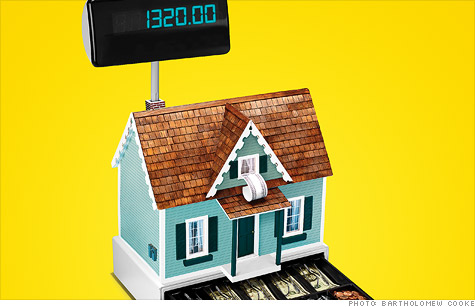
(The house above, located in Garfield Heights, Ohio, is listed for just $9,900.)
Buy a house for less than it costs to buy a car? According to a recent report in Time's "Moneyland" column, this season has seen a spike in sub-$10,000 homes. In Baltimore, one in 10 homes sold during the first half of 2011 cost less than 10 grand. Ditto for foreclosure-plagued Detroit, where a search of our real estate listings turns up more than 1,000 hits on properties for $10,000 or less.
Sure, you'll have to adjust your expectations a bit, but many of these super-cheap homes won't necessarily force you to abandon considerations like size, location and appearance. In fact, the houses we've compiled in our $10,000-or-less house gallery have more going for them than just their astonishingly low price tags. Don't believe us? Click through the gallery below:
Thursday, September 29, 2011
Yes, You Can Buy a Decent Home for $10,000 or Less - Just not in the Bay Area!


Tuesday, September 27, 2011
"Shadow Inventory" Shrinking - Walnut Creek Housing News
The industry’s shadows are shrinking, according to CoreLogic. The residential shadow inventory of unlisted REOs and soon-to-be REOs stood at 1.6 million units as of July 2011, based on the analytics firm’s calculations.
CoreLogic says that tally represents a supply of five months and is down from 1.7 million units in April and 1.9 million units in July of 2010.
“The moderate decline in shadow inventory is being driven by a pace of new delinquencies that is slower than the disposition pace of distressed assets,” CoreLogic said in a report released Tuesday.
CoreLogic estimates the current stock of properties in the shadow inventory by calculating the number of distressed properties not currently listed on multiple listing services
that are seriously delinquent (90 days or more), in foreclosure, and real estate owned (REO) by lenders.
Of the 1.6 million properties currently in the shadow inventory, CoreLogic’s study shows that 770,000 units are seriously delinquent (2.2-months’ supply), 430,000 are in some stage of foreclosure (1.2-months’ supply) and 390,000 are already in REO (1.1-months’ supply).
As of July 2011 the shadow inventory is 22 percent lower than its peak level, reported by CoreLogic to be 2 million units, or an 8.4-months’ supply, in January 2010.
The company also highlighted the fact that the aggregate current mortgage debt outstanding of the shadow inventory was $336 billion in July 2011, down 18 percent from $411 billion a year earlier.
“The steady improvement in the shadow inventory is a positive development for the housing market,” said Mark Fleming, chief economist for CoreLogic. “However, continued price declines, high levels of negative equity, and a sluggish labor market will keep the shadow supply elevated for an extended period of time.”
Based on CoreLogic’s market assessment, the total housing inventory – including both the shadow inventory and visible inventory listed for sale – was 5.4 million units in July of this year, down from 6.1 million units 12 months earlier.
The shadow inventory accounts for 29 percent of the combined shadow and visible inventories.

We have seen this in our local Walnut Creek market.
Monday, September 26, 2011
80% of Current Homeowners Would Like to Buy Another Home- News about Real Estate in Walnut Creek
Twice a year, we ask people across the U.S. (through an online survey conducted by Harris Interactive) if homeownership is still part of their personal American Dream along with a few other questions about the obstacles that are keeping them from buying at this time. So what did our Fall 2011 survey tell us? To give you the inside scoop, we put together an infographic to help us walk though all the key findings. Let’s get started…
Survey Says: American Dream (of Homeownership) is Alive and Well
This past year has been filled with a series of unfortunate events – from the economy hovering on the edge of another recession and a lackluster real estate market to politics that are making people second guess their 2008 vote. Given everything that has happened, it’s only natural to assume that fewer people would say buying a home is a good idea, right? Surprisingly, this is not the case.What our survey told us is that a whooping 70% of Americans said they still see homeownership as being part of their personal American Dream. When we asked this same question back in January, it was also 70%. What this means is being a homeowner is still on most Americans’ “I’ve made it in the U.S.A.” to-do list and that nothing (that’s happening politically or economically) is going to bring them down. Even when you look at the data by age (as we did below), most said their American Dream includes owning a home. In particular, we thought this sentiment was pretty strikingly high among young people – the children of the 90s and 80s in this case – especially when you consider the fact that most do not own their own homes.
Homeowners Can’t Get Enough (Of Buying Homes)
Believe it or not, 57% of current homeowners said owning a home is among the best long-term investments they could make – even more than buying gold and putting cash under a mattress (go figure). If you think about it, that’s a bold statement considering how many people have lost their homes to foreclosure thus far. As a matter of fact, 80% of these folks say they want to buy another house in the future. But wait, there’s more. When we broke down this stat by age, we found out that an astonishing 69% of current homeowners age 55 years old or older (we’re talking retired or almost retired Baby boomers here) plan to buy another home. Must be something about that homebuying rush that they can’t get enough of, eh?
Buying A Home Ain’t No Walk In The Park
Most housing markets may be “offering” a blue light special on real estate all year long, but times have changed. The home buying process isn’t easy anymore.Hands down, the biggest barrier to being a homeowners is saving up for a down payment (though this isn’t necessary a bad thing ’cause you should be putting at least 20% down. Letting people buy with zero down was one of many things that got us into this mess of a housing crisis). This especially rang true for Millennials (18-34 year olds) – 62% said this was among the biggest hurdles that they faced in trying to buy a home. On the flip side, qualifying for a mortgage and having a poor credit history were a bigger concern among Gen X’ers (35-54 year olds).


Wednesday, September 21, 2011
Think Home Sales are Down in Contra Costa County? Think Again!
-->
Contra Costa County
The chart below represents the average sales price for all homes, by month, in Contra Costa County. The data is based on MLS sales, from the local MLS system and is inclusive of single family attached and detached homes and condominiums.
A Green trendline indicates a positive trend
A Yellow trendline indicates a neutral trend
A Red trendline indicates a negative trend
-->

Thursday, September 15, 2011
Bank of America shifts West Coast foreclosures into overdrive - Walnut Creek Real Estate News
Bank of America shifts West Coast foreclosures into overdriveby JON PRIOR tag. * * If you do not want to deal with the intricities of the noscript * section, delete the tag (from ... to ). On * average, the noscript tag is called from less than 1% of internet * users. */-->
Tuesday, September 13th, 2011, 7:12 pm
Notice of default filings jumped nearly 70% in California from the previous month, led by renewed activity from Bank of America (BAC: 7.33 +3.97%), according to the data provider ForeclosureRadar.
Foreclosure starts increased in five West Coast states from the previous month: California, Arizona, Washington, Oregon and Nevada.
BofA foreclosure starts more than doubled in August, jumping 116% from the previous month. Wells Fargo (WFC: 25.19 +2.03%) and U.S. Bank (USB: 24.05 +2.30%) also showed increases but fell short of the BofA restart, according to ForeclosureRadar, which monitors West Coast states.
"While it can’t be said for every state in the nation, we are seeing continued improvements in foreclosure volumes in many areas of the country, and that is a potential harbinger for housing market recovery," a BofA spokesperson said. "Strong gains like that from July to August demonstrate our progress – primarily in non-judicial states like California and Nevada – clearing more volume to advance to foreclosure once we pass the numerous, improved quality controls we have in place and only after all other options with homeowners have been exhausted."
Bank of America along with many others froze the foreclosure process in the fall of 2010 to sort out mishandled foreclosure documentation in a scandal that became known as robo-signing. The 14 major servicers signed consent orders with federal regulators earlier this year. After a review of 2,800 foreclosure files – roughly 200 per bank – regulators found "insufficient processes" and ordered more in-depth third party look backs.
"Bank of America appears to be primarily responsible for the surge in foreclosure starts this month," said Sean O'Toole, CEO of ForeclosureRadar. "Since their average time to foreclose has recently increased to more than a year, it is unclear that these foreclosure starts will lead to an increase in foreclosure sales anytime soon."
In California, it takes an average 333 days to complete the foreclosure process, which is 49 days more than one year ago.
Properties sold back to the bank, or REO, increased 243% in Oregon for the month as Recontrust, a subsidiary of BofA, began clearing 2,800 foreclosures that began in April, according to ForeclosureRadar.
"The industry has not yet returned to normal or necessary foreclosure activity levels, but progress is certainly being made," the BofA spokesperson said.

Wednesday, September 7, 2011
Trulia Joins in on the Home Valuation Game - Walnut Creek Homes for Sale - Condos for Sale
Trulia launches real estate valuations in beta
Test launch includes more than 1 million off-market homes
By Andrea V. Brambila, Wednesday, September 7, 2011.
Real estate search and marketing site Trulia is jumping into the property valuation space. Today, the company rolled out Trulia Estimates, which will provide consumers with an assessment of a home's worth.
Trulia Estimates is launching in beta in the San Francisco Bay Area, where the company is based. The test market includes five counties: Contra Costa, Marin, San Francisco, Santa Clara and San Mateo.
The beta launch includes a about 1 million off-market single-family homes, condominiums and townhomes, including recently sold homes, the company said. Valuations are displayed on the site's map search and on pages for individual properties.
"Our ... users have asked for it and in today's market it's no surprise that consumers are wondering what their homes are really worth," said Ken Shuman, Trulia's spokesman.
Trulia plans to "value as many properties as we can" in the future, he added.
The company plans to eventually roll out Trulia Estimates nationally and expand it to include for-sale homes, though there is no timeline in place for that launch, Shuman said.
"We want to be sure to take the feedback and user inputs from our early Bay Area beta testers to help ensure the product is ready for a national rollout," he said.
Trulia expects consumers to use the valuations as a starting point to price their own home or to help their determine how much to make an offer on a home. Nevertheless, Shuman emphasized that "these estimates don't replace the need for a professional appraisal."
The estimates are based on public records information. Feedback from users and local experts, such as real estate professionals, is also "built into the algorithm and in future versions their feedback will affect the estimate price," Shuman said. "Who knows the property better than the person living there?"

He added that the integration of user feedback on individual properties will continuously improve Trulia Estimates and differentiate them from valuations on other sites.
"Consumers and agents can voice their opinion on whether they believe the estimate is too high, too low or just right and they can provide comments on the estimate," he said. Though incorporated in the site's valuation algorithm, the comments will not be published on the site until a future date.
"It is our long-term goal to bring transparency into the confusing process of figuring out how much your home is worth. This is not part of the beta product, but we hope when the full product launches, transparency will be a key differentiator," Shuman said.
Competitor Zillow, perhaps best known for its "Zestimate" property valuations, recently incorporated user-submitted information to improve the accuracy of its valuation algorithm to an 8.5 percent margin of error nationwide. Shuman said that although margins of error are not part of Trulia Estimates' initial beta launch, the company has plans to publish them in the future.

It will be interesting to see the Trulia vs. Zillow valuations. I wonder if they will on average be higher or lower?
Tuesday, September 6, 2011
Despite Dismal News - Buying Rental Property Now Makes Great Sense - Walnut Creek Real Estate News
Cashing in on rental property
@Money September 2, 2011: 6:07 AM ET(MONEY Magazine) -- Most of the news lately about real estate has been dismal: Home prices are swooning, foreclosures ballooning.
There is, however, one bright spot: the rental market, where demand is up and rents are rising. That's partly because those foreclosures have turned more than 4 million former homeowners into renters, but also because many other prospective homeowners, worried about losing their jobs or housing prices falling a lot further still, are reluctant to buy now.
As with many investments, the best time to get in is when most others are sitting on the sidelines. To figure out whether you can benefit by investing in rental property, here's what you need to know.
THE CASE FOR BUYING NOW
Many factors make this a great time to invest. Mortgage rates are at a 40-year low, and homes in many areas are ultra-cheap. Meanwhile, demand for rentals has risen in more than 500 cities, according to recent Census data. That, in turn, has enabled landlords to charge more. Hotpads.com, a real estate research firm, reports that rents nationwide jumped 11.6% in 2010, to $1,320 a month.
You'll need that rental income to tide you over until home prices bounce back; in fact, the typical investor today plans to hold for 10 years, according to a survey by the National Association of Realtors.
Send The Help Desk your real estate questions.
If you can hang on that long, you've got a good shot at solid gains, especially if you're financing the home purchase. "Whereas leverage is dangerous when buying stocks, it can be a good long-term strategy with real estate," notes real estate investor and Columbia University adjunct finance professor Marshall Sonenshine.
The big catch: "Can you afford to hold the property that long and not need the equity for your kid's college fund?" says Sonenshine. Or whatever other pressing need might crop up.
You'll also face some tough financing rules. Most banks now require a down payment of at least 20% to 25% and evidence you have enough cash to cover six months' worth of mortgage, tax, and insurance payments.
HOW TO FIND A GOOD DEAL
Investment real estate is like produce: It's best bought locally. "Buy something you can get to in 10 minutes," says Seattle real estate investor Bill Snyder.
Familiarity with the neighborhood also limits nasty surprises like a noisy bar or a nearby development competing for renters.
Work with a local realtor who has experience with rentals and can help you assess how attractive a given home will be to tenants.
10 Best cities to buy a rental property
And while prices on multifamily dwellings haven't dropped as much as they have on single-family homes, don't ignore plexes: Intake from a few rents instead of just one will boost your cash flow; a single vacancy won't hurt as much; and you could benefit from economies of scale for things like appliances and painting. But stick to buildings with four units or fewer to avoid stricter financing requirements, such as a bigger down payment and higher mortgage rates.
Once you've identified candidates, crunch the numbers. The goal: to make sure your rental income will at least cover your loan payments, plus a 20% cushion to handle repairs, vacancies, and property management.
To figure out what you'll garner in rent, ask sellers for recent leases, says Snyder, and double-check their numbers by perusing sites like Rentometer and Craigslist for similar rentals in the neighborhood.
Assume your mortgage rate will be at least a half-point higher than rates on owner-occupied properties. Factor in insurance and property taxes, and bank on a 5% vacancy rate. Otherwise, "one empty month can kill you," says Ellie Berlin, a broker with Houlihan Lawrence in Larchmont, N.Y.
KNOW WHAT YOU'RE IN FOR
Brush up on your people skills: Owning rentals also means responding to tenant complaints, like the 2 a.m. phone call about a broken toilet. Want to palm off the grunt work? You can hire a handyman (around $45 an hour) or a management company (8% to 10% of monthly income plus a half-month's rent for filling vacancies), but the luxury will eat into cash flow.
To find your own tenants, creative ads on Craigslist are your best bet. Run credit and reference checks (National Tenant Network, at ntnonline.com, can help). And invest in small touches to make your place stand out, such as cool lighting fixtures or antique door hardware. Those will pay off when it's time to sell too.